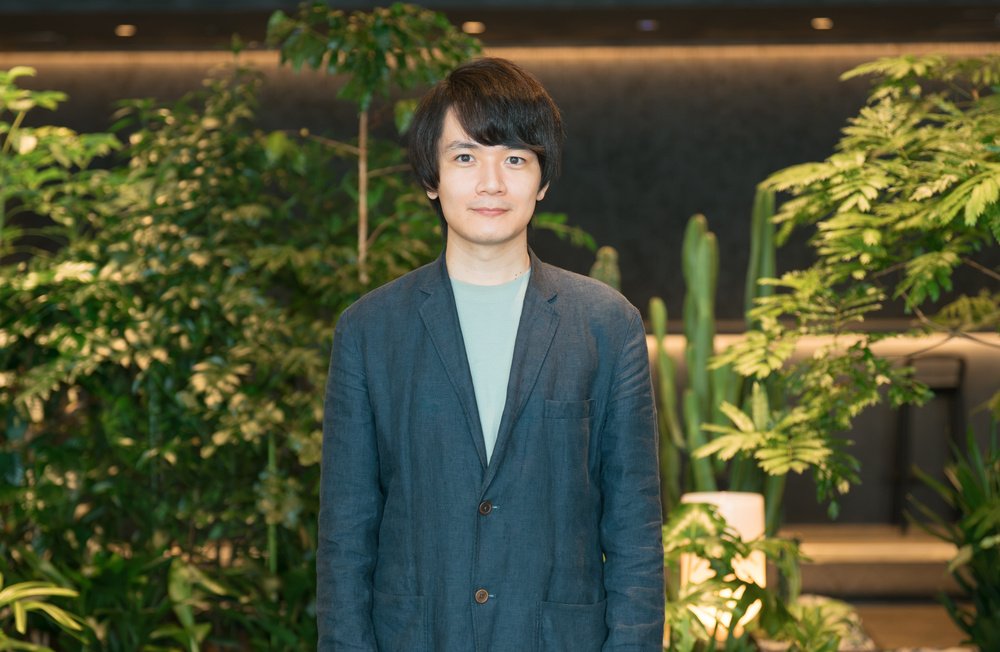
Sora Takashima
Becoming a Tech Lead in His Fourth Year at the Company
Building Trust and Leading AI Agent Development
Becoming a Tech Lead in His Fourth Year at the Company
Building Trust and Leading AI Agent Development
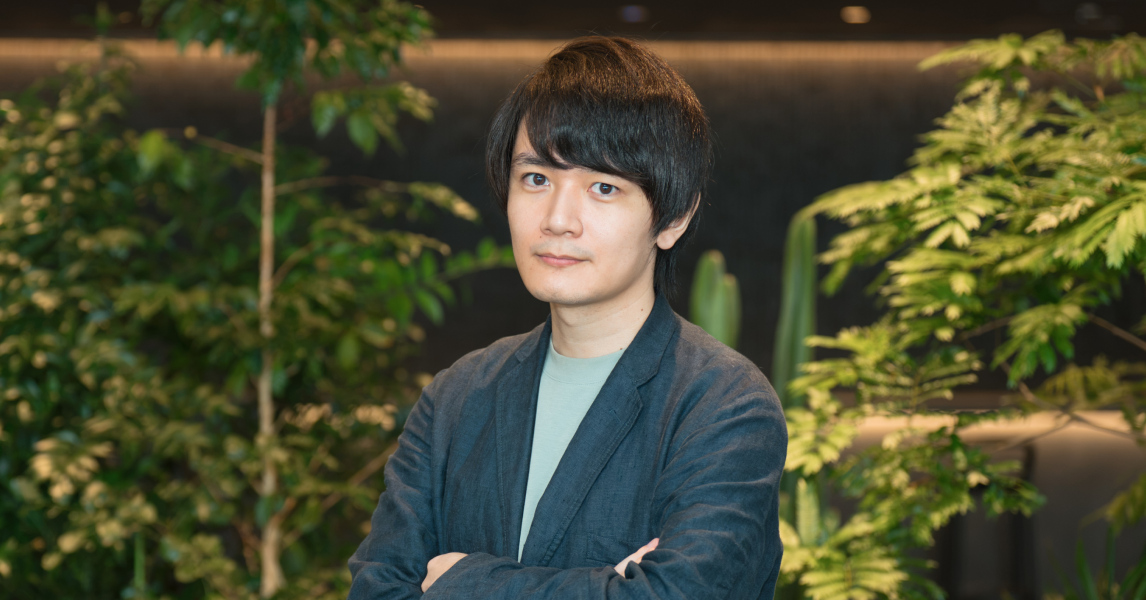
Sora Takashima | Joined in 2023
Takashima joined Yahoo Japan Corporation (now LY Corporation) as a platform engineer after graduating from university. After working to improve the accuracy and quality of store and spot information displayed on Yahoo! JAPAN Search, he began developing new features and improving quality for the local domain of Agent i in his third year. In addition to hands-on development, he serves as a backend tech lead, providing technical support to the team.
Note: This interview was conducted in September 2026. Service names and affiliations are as of the time of the interview.
*This interview was conducted in September 2026.Service names and affiliations are as of the time of the interview.
Tell us about your job search.
As a student, I conducted machine learning research in areas such as image recognition and large-scale pretraining. A career in research was one option, but after taking part in internships and other programs, I increasingly wanted to work on product development while applying what I had learned through research.
I also came to think that if I was going to build things, I wanted to work on highly influential services that reach large numbers of people. To continue performing at a high level as an engineer, I also prioritized an environment where I could focus on development and receive support for my growth as an engineer during my job search.
Why did you choose LY Corporation?
It started when I participated in a summer internship at the former Yahoo Japan Corporation that was introduced through my university's industry-academia collaboration program. I was attracted by the company's top-tier traffic in Japan and the vast, diverse data it had.
What stayed with me most from the internship was how warmly my mentor and the rest of the team welcomed me. Looking back, many of my ideas as a student were probably still rough, but no one dismissed them outright. There was a culture of respecting ideas and saying, "Let's give it a try first."
The development experience itself was exciting too. I had the opportunity to experiment with Transformer-based DNN features that had not yet been incorporated into the product. It was an ambitious challenge in a period of just two weeks, but with support from the people around me, I was able to test what was then cutting-edge technology and produce results.
What surprised me even more was that my mentor later wrote a paper based on the internship results with me as a coauthor and presented it externally. That experience made me strongly want to work alongside engineers who were not only highly capable and deeply committed to technology, but also people I could respect. That was what convinced me to join the company.
What are you working on now, and how would you describe the culture?
I work on the Outing AI Assistant. LY Corporation is focusing on developing AI agents that support people in a variety of everyday situations, and the Outing AI Assistant specializes in helping users find sightseeing spots and restaurants, providing answers and recommendations that best match their requests. The service was launched only in 2025, and we have continued expanding its features at a rapid pace.
I serve as the tech lead for backend development. While designing and implementing projects myself, I also lead and support other members across multiple projects. I am also involved in analyzing the quality of the Outing AI Assistant and considering improvements to raise response quality.
The actual development work is very hands-on and involves constant trial and error. When the AI does not return the response we expect, we investigate where the cause lies, form hypotheses, devise improvements, and test them. When necessary, we work across a broad range of areas, from improving models and modifying surrounding systems to integrating with services and AI agents in other domains. The thought process I developed through research as a student—forming hypotheses and repeatedly testing them—is still highly relevant to the AI agent development I do today.
There is also an environment where people are entrusted with responsibilities regardless of age or years of experience, allowing younger employees to take on challenges with significant autonomy. LY Corporation is a large company with services at considerable scale, high traffic, and many employees, but if you proactively say, "Could there be a better way?" or "Wouldn't this be necessary for users?" people will encourage you with, "Sounds good. I’ll leave it to you, so go ahead." Of course, being entrusted with that responsibility requires building a track record through your daily work and earning the trust of those around you. With that trust as a foundation, there is a culture where anyone can take on important roles regardless of seniority.
Was there a project or assignment that became a turning point in your career?
Looking back on my career so far, there have been three major turning points.
The first came in my first year, about three months after I joined my team, when I worked on developing a feature that summarizes restaurant reviews. The initiative generated store descriptions by summarizing enormous volumes of reviews and used the OpenAI API, which was new to our team. As a pioneer within the team, I explored how to work with an external large language model and how to tune accuracy through prompting as I moved the development forward.
What challenged and trained me most was designing evaluation metrics for quantitatively assessing the quality of generated text. I was responsible for identifying the dimensions by which quality should be evaluated, defining measurement methods, and building an improvement process. Tackling such a difficult problem in my first year became a foundation for the work I do today. The project also received an internal award, making it my first major success as an engineer.
The second turning point came in my third year, when I spent about six months fully responsible for building a deep learning model for location-list search and deploying it to production, from design through release. Through my research as a student, I had knowledge of model training and fine-tuning. But when it came to integrating a model into a large-scale production system, research-level knowledge alone was nowhere near enough.
I struggled, but I thoroughly read the extensive internal documentation available to us and took a painstaking approach of running small tests repeatedly to verify behavior. I also worked closely with my manager and colleagues, steadily resolving each issue one by one. As a result, we improved both the number of search results displayed and the click-through rate (CTR), which gave me greater confidence as an engineer. Learning how the overall system works and the practical know-how needed to work with the technologies involved also connects directly to my current work.
The third turning point is the Outing AI Assistant, which I work on now. It allows me to bring together the knowledge of internal systems, AI technologies, and experience using coding agents that I have built up so far.
Another major change has been that I now think about how to maximize the team's overall output as a tech lead. Rather than simply doing the development work myself and delivering results as an individual developer, I am learning how to act in ways that improve the results of the entire team. I see that as one of the biggest areas in which I am continuing to grow.
You have taken on challenging work at a relatively early stage in your career. What do you do to keep growing?
Because the AI field changes so rapidly, I make full use of AI for gathering information and learning itself. For example, when I find a paper or tech blog attracting attention on social media, I first load it into a tool such as NotebookLM to extract the key points. I then read only the parts of the original that I truly need in depth. In this way, AI helps me dramatically reduce the time required to take in information.
The company's systems and culture also strongly support self-development. My department holds an initiative called DevDay once a month. Regardless of whether a technology is directly related to our day-to-day work, each person researches and tests something they are interested in and shares what they learned in a short lightning talk. I used one DevDay to create a mock-up with AI for a feature that I thought users would appreciate and shared it with the team. The idea actually became a project and, after a proof of concept (PoC), was released as a feature. I see the value of DevDay in the fact that it does not end with simply trying new technology—it can lead all the way to a real product.
I also took on Kaggle as part of experimenting with coding agents and won a silver medal in the first competition I entered seriously. LY Corporation offers incentives based on Kaggle medals and study sessions led by internal experts, creating an environment that encourages engineers to pursue technical exploration.
What do you find appealing about working at LY Corporation?
One attraction is how quickly we can incorporate advances in AI technology into products. As technological progress continues to expand what we can build, we can work with the latest technologies and rapidly turn good ideas into something tangible. It is also exciting to have many opportunities to create new value by working with the company's various services and making use of available data.
Our team is actively promoting AI-Driven Development (AIDD), using AI throughout the process—from organizing requirements and creating mock-ups and specifications to development and testing. Stakeholders from many disciplines, including product managers (PMs), designers, and frontend and backend engineers, come together to review multiple mock-ups and proofs of concept, exchange views, and make repeated revisions over periods ranging from a few hours to a few days. Because we can use something that actually works as a shared point of reference, we can make decisions and reach alignment quickly.
At the same time, it is difficult to keep up with technological advances and design systems flexibly enough to accommodate future changes. Evaluating the quality of AI-generated responses is not easy either. These are difficult challenges, but I feel that facing them is itself helping me grow as an engineer.
My role has also expanded beyond hands-on development to include more opportunities to participate in decisions that move the product forward. Recently, I have also been involved at the stage of asking questions such as, "What should the ideal state of the product be?" "How should we measure it?" and "What projects should we take on to achieve our goals?" There are still areas I find difficult, but I am taking on the challenge while actively sharing my views.
What makes these challenges possible is a team atmosphere where people respect one another's expertise and can consult each other regardless of seniority or position. People listen carefully to the views of younger employees, and when someone volunteers to take something on, the people around them provide solid support.
What kind of people do you think can thrive at LY Corporation?
First, people who are motivated to make the most of the autonomy they are given and act proactively. There is a culture of actively adopting good ideas regardless of seniority, so I think people who take initiative have more opportunities to grow.
In terms of qualities as an engineer, I would say people who have strong intellectual curiosity about new technologies and enjoy trying things for themselves.
Another important quality is curiosity about how data can be used. LY Corporation operates across diverse business domains and offers an environment where teams can use available data in product development. For people who want to make the world more convenient or create interesting products unlike anything that has existed before, I think it is an environment that offers exceptional opportunities.
Finally, do you have a message for prospective candidates?
I genuinely feel that choosing this company as a new graduate was the right decision for me. I am surrounded by senior colleagues who combine strong technical expertise with warm personalities, and I have been able to gain a wide range of experience from early in my career.
As AI becomes more widespread, the way engineers work is changing. As development with AI as a partner becomes more common, I believe fundamental judgment will become even more important: the ability to define the ideal experience we should create, the ability to design the overall architecture, and the ability to properly evaluate and ensure the correctness of AI-generated deliverables and the quality of AI responses. LY Corporation provides an environment where engineers can develop these capabilities through hands-on experience.
I look forward to taking on challenges together with people who want to pursue technology deeply and use its power to make an impact on society.
Related interviews
-
 Takuro Ina
We deliver new user experiences through Natural Language Processing leveraging the power of our unparalleled data scale.
-
 Masanari Hamada
Developing an open and inclusive web has been my life’s work. I hope to enhance the developer experience for everyone in the company.
-
 Koki Kato
LY Corporation has a mountain of technically challenging jobs. That's what makes working here so interesting.
-
Takuro Ina
We deliver new user experiences through Natural Language Processing leveraging the power of our unparalleled data scale.
-
Masanari Hamada
Developing an open and inclusive web has been my life’s work. I hope to enhance the developer experience for everyone in the company.
-
Koki Kato
LY Corporation has a mountain of technically challenging jobs. That's what makes working here so interesting.
Related interviews
-
Takuro Ina
We deliver new user experiences through Natural Language Processing leveraging the power of our unparalleled data scale.
-
Masanari Hamada
Developing an open and inclusive web has been my life’s work. I hope to enhance the developer experience for everyone in the company.
-
Koki Kato
LY Corporation has a mountain of technically challenging jobs. That's what makes working here so interesting.
-
Takuro Ina
We deliver new user experiences through Natural Language Processing leveraging the power of our unparalleled data scale.
-
Masanari Hamada
Developing an open and inclusive web has been my life’s work. I hope to enhance the developer experience for everyone in the company.
-
Koki Kato
LY Corporation has a mountain of technically challenging jobs. That's what makes working here so interesting.
Official Recruitment
Social Media Accounts
We share recruitment-related information on our official social media channels.
Content available in Japanese only