"Keep Taking On New Challenges, Move Fast, and Never Fear Failure": A CTO's Perspective on Product Development in the AI Era



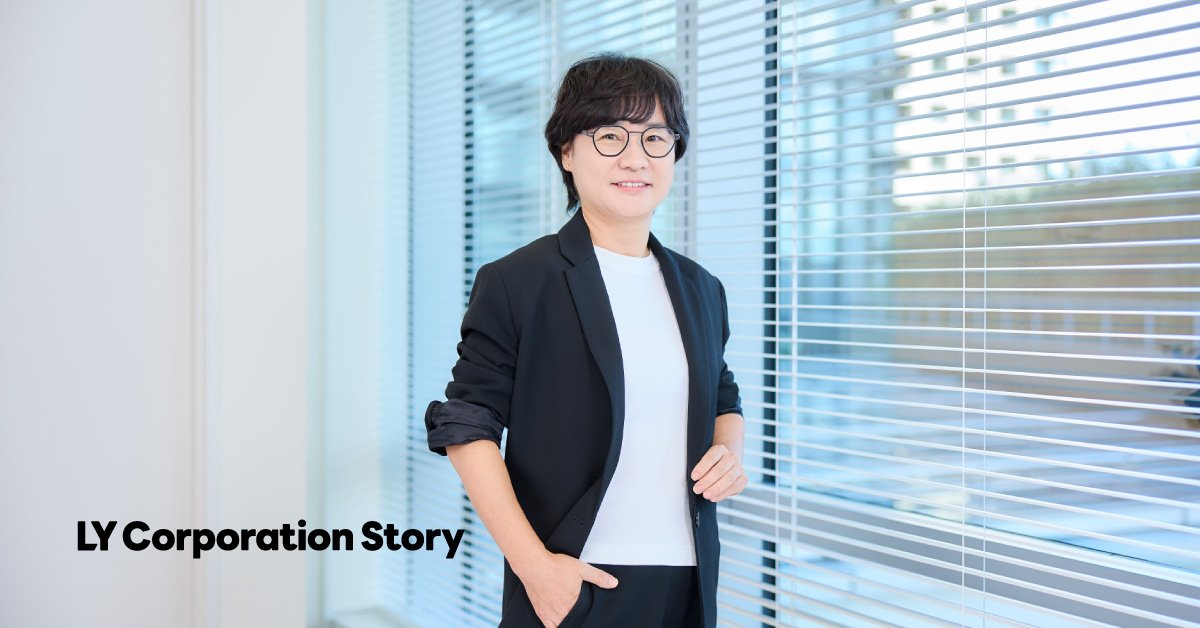
"As AI dramatically reshapes the business landscape, we should think about what we can do next and take the leap into new roles."
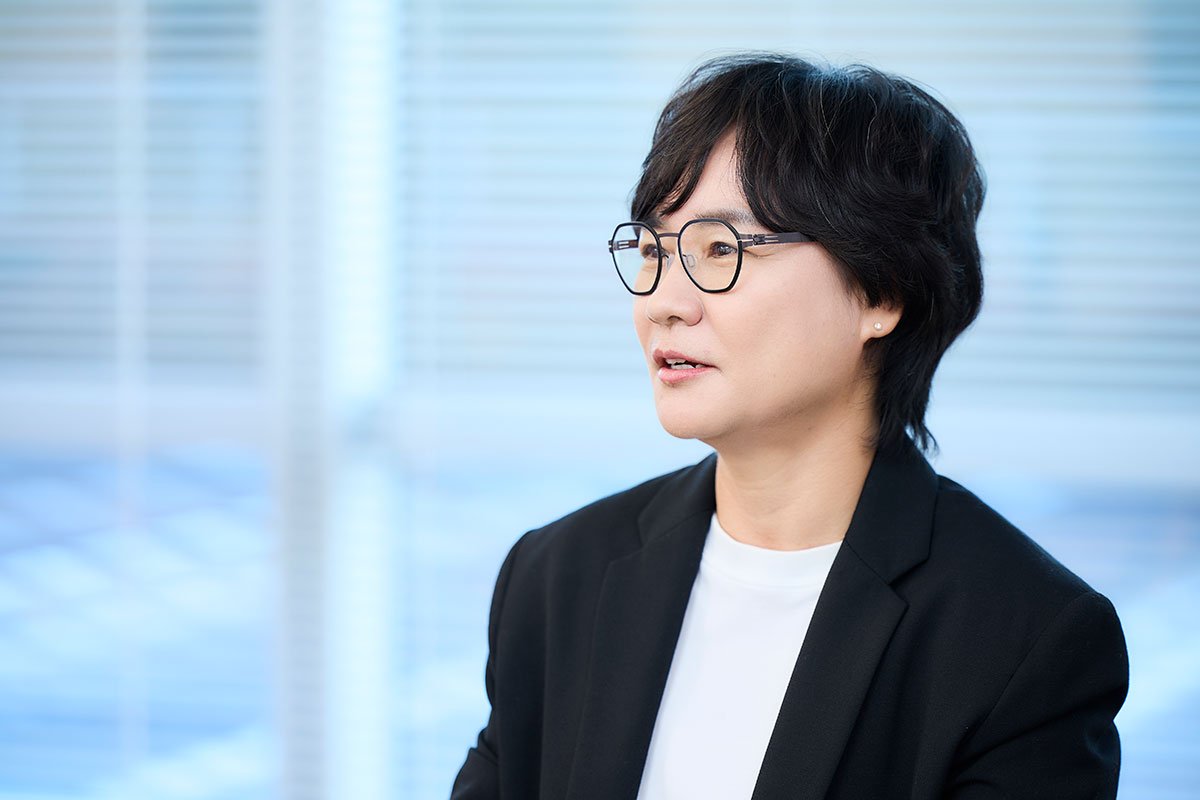
So says Euivin Park, CTO at LY Corporation, who leads AI transformation (AX) across the company.
Starting with the launch of search services in Japan, Euivin went through repeated cycles of trial and error before contributing to the launch of LINE. Since then, she has continued to take on new challenges around the world. Underlying her approach are two core beliefs: "take on challenges quickly, learn from failure, and move on to the next challenge," and "show grit and persevere until you succeed."
What value does LY Corporation strive to create in the AI era? And what will it take for its people and organization to bring that future to life? We asked her about her technology strategy and the mindset behind it.
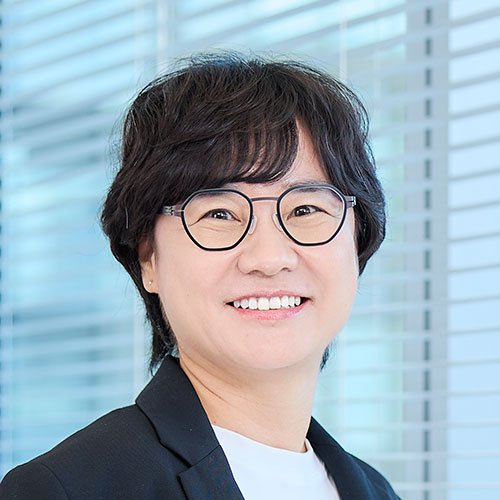
- Euivin Park
- Executive Corporate Officer, CTO, LY Corporation
After working at Neowiz Games Corporation, Euivin Park joined the search service 1noon (now NAVER Corporation) in 2005. In 2007, she joined NHN Japan, where she worked on the development of search engines, search services, and LINE. After subsequently working at NAVER Japan, she was appointed Executive Officer of LINE (now A Holdings Corporation) in 2013. She became Senior Executive Officer and CTO in 2014, Managing Corporate Officer and Co-GCTO in 2021, and has served in her current position since October 2023, driving AI transformation (AX) across the company.
LINE Was Our "One Last Shot"
―What was the biggest turning point in your career?
Looking back, the biggest turning point was definitely LINE.
While I was working on community services at a gaming company, I met Jungho Shin, who is now our CPO. We then left together to launch 1noon, a search engine company. With Shin as CTO and me as the development team leader, we set out to compete in a global market where Google was the undisputed leader.
Later, 1noon joined the NAVER Group, and Japan was chosen as the first market for our global search service, so I had to move from Korea to Japan at short notice. For me, it was a fresh start in an unfamiliar market and culture, without being able to speak Japanese. What followed was a period of continuous trial and error, as we developed various new services built around search and faced repeated setbacks.
Honestly, I was starting to feel that it was time to return home.
It was during such time that the Great East Japan Earthquake struck. So many people desperately needed a way to get in touch with others. To address those needs, Shin and the rest of us decided to take on one final challenge, saying, "Let's try building just one more thing." That challenge ultimately became LINE.
―What did you learn from those experiences, and what values continue to guide you today?
Through repeated setbacks, I learned that what matters more than avoiding failure is taking on a challenge, learning from the outcome, and moving quickly to the next one.
That does not mean we should accept failure as the norm. Even when the odds of success are low, we need the grit to keep going until we succeed.
And at the heart of that approach, we must always see things from the user's perspective. We need to keep asking, "What new value can we offer users?" however small that value may be. That mindset has stayed with me.
―You went on to lead technology efforts not only in Japan but also globally as LINE expanded. Was there anything you paid particular attention to?
Yes. After LINE's success, we successively opened development offices in Korea, Taiwan, Thailand, Vietnam, Indonesia, and elsewhere. I traveled between our main development hubs so often that I would wake up wondering, "Which country am I in today?"
Each time, I was taking on something new with new team members. Throughout that process, I focused on building LINE's culture.
Of course, it is important for everyone to develop their technical skills, but that alone is not enough to take on major challenges. What matters is not just individual capability, but our strength as a team. We can take on major challenges because we work with colleagues who openly share their knowledge and expertise, discuss ideas, and support one another.
Building a culture where we can keep taking on challenges together without fear of failure remains my highest priority.
Companies That Take On New Challenges Quickly Have an Edge in the AI Era
―What is your mission as CTO?
My mission is to accelerate the creation of value for businesses and products through technology, and enable the entire company to adapt to the AI era. A key priority is establishing a product development environment that reduces time to market―the period from planning to service launch―while accounting for security and costs.
Accordingly, my role is to establish the foundations for rapid service development, incorporate security and cost considerations from the outset, and enable employees to translate ideas into reality without delay.
LY Corporation has accumulated an extensive portfolio of services over a relatively long history for an IT company.
To advance AX across such a large, long-established organization, we first need to make both our systems and the organization itself AI-ready. This means preparing our large, complex systems to connect with AI, while reorganizing documentation and business processes into forms that AI can readily understand. It may not sound exciting, but this groundwork is what will let us launch new services much faster.
―What do you keep in mind when making decisions?
I try to set aside any preconceptions and make sure I understand what is really going on.
I talk things through with everyone involved so we are on the same page, and I listen to different views from the people doing the work. For products, I also try them myself as a user and look into things until I understand them well enough, and only then do I make a decision.
When a decision is difficult, though, I try to decide quickly and move forward, rather than put off the decision and create a bottleneck. As I proceed, I reassess the situation and promptly correct anything that needs correcting.
With change happening so quickly in the AI era, I believe the cycle of trying things early and then reassessing our decisions will become increasingly important.
Human Responsibility Grows as AI Advances
―Companies around the world are investing heavily in AI development. What do you see as LY Corporation's distinctive strengths?
Through more than 100 services, including LINE and Yahoo! JAPAN, we are connected to the daily lives of users in Japan and maintain a diverse range of databases.
From a user experience (UX) perspective, these everyday connections allow us to integrate AI seamlessly into our services and draw on data across our existing databases to make those services much more convenient to use.
For example, users could search using Yahoo! JAPAN while chatting on LINE, then complete a purchase and payment using Yahoo! JAPAN Shopping and a payment system. By using AI to connect services more quickly and seamlessly, we can offer users the information and functions they need more proactively and in ways that are easy to understand.
―What do you consider essential to deliver such services?
Since we handle data from different services and users, we need more than technical capabilities: security and governance must underpin everything we do.
I do not believe convenience alone will drive widespread AI adoption. Only when AI offers both convenience and peace of mind will users embrace it as part of their daily lives.
―As AX progresses across the company, some employees worry that AI might take their jobs.
I believe human roles will be redefined rather than disappear.
AI will likely take over simple coding, documentation, and automation tasks where the underlying assumptions are clear.
In turn, people will be expected to take on new kinds of work, assume broader roles, and make more complex decisions.
Previously clear boundaries between roles will begin to blur. People responsible for planning will also take on development and analysis. Engineers will go beyond writing code to analyze markets, contribute to planning, and consider systems as a whole. As their roles expand, so will their responsibilities.
At LY Corporation, we have faced staffing constraints when trying to take on new challenges while keeping existing operations running. I believe automating straightforward tasks will allow us to pursue more new initiatives.
Some parts of our current jobs may disappear, but new roles will emerge. What matters is adapting to the AI era, considering what more we can do, and taking the leap into new roles.
―Even as AI advances, what roles will remain uniquely human?
The most important are taking responsibility and making decisions.
AI can write code and make suggestions. But it is humans who decide whether to adopt what AI produces and release it to the world, and take responsibility for its quality.
I think it is very dangerous to leave everything to AI and release something we do not understand.
Using AI makes it even more important for us to understand things deeply. The ability to evaluate its output and judge how far we can trust it will matter more than ever.
There is one more thing that only humans can do. That is to create new value through dialogue with one another.
We can use AI on our own, but we cannot build major products alone.
People with different areas of expertise need to bring their ideas together, discuss them openly, and work toward a shared goal.
I do not think that process will change in the AI era.
Rather, communication between people will become even more important as AI advances.
The AI Era Calls for Organizations That Continually Take On New Challenges
―Lastly, please tell us what you aim to achieve as CTO in the future.
In the short term, I want to advance AX further and make not only our systems but also our people AI-ready. My goal is to build a company where every employee can use AI effectively to take on a wider range of challenges.
At the same time, I want to place even greater emphasis on our organizational culture. LY Corporation has truly talented, wonderful people. I particularly want our younger colleagues to take on more challenges without fearing failure.
Rather than being constrained by past successes or reasons something cannot be done, we should ask, "How can we make it happen?" and give it a try. If we fail, we learn from the experience and try again.
It is people, rather than technology itself, who bring advances in AI to society.
We need people who take on challenges, who discuss ideas, and who ultimately take responsibility and make decisions.
It is through their efforts that new technology becomes something of value to society.
To make that future a reality, I want us to remain an organization that keeps taking on challenges without fear of failure.
Interview date: July 14, 2026
Written by: LY Corporation Story Editorial Team Photos by: Naoyuki Inomata
*The affiliations and titles in the article are as of the time of the interview.

- About The LY Corporation Story
- Making daily life more convenient and exciting for everyone.
As our corporate blog, The LY Corporation Story will share the inside story behind the challenges that we take on to create WOW as well as the thoughts and feelings behind them.