15 Years of LINE: How LINE Has Addressed Disasters in Japan, Taiwan, and Thailand (Part 1) ――Connecting and Supporting People During Disasters for 15 Years
Corporate
LINE was created 15 years ago, in 2011, following the widespread disruption of communications caused by the Great East Japan Earthquake. It was born from a strong desire to create a tool that would allow people to quickly connect with their loved ones and check on each other ' s safety, even in an emergency.
Fifteen years on, how has LINE responded to disasters in Japan, Taiwan, and Thailand as a life platform that helps people stay connected with those who matter to them and with society? This article features a special panel discussion with three CSR representatives from Japan, Taiwan, and Thailand.
In Part 1 of the discussion, the representatives share their personal experiences and look back on disaster response efforts in their respective countries and regions, exploring the role LINE has played over the years.
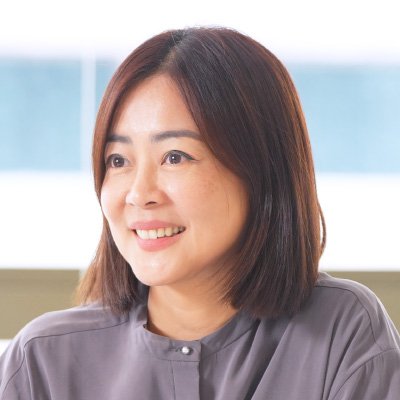
Nicharass Archyasithiwat (Aey)
Chief Marketing Officer, LINE Company (Thailand) Oversees brand building and social impact initiatives at LINE Thailand. She leads the "LIFELINE" joint public-private disaster preparedness project partnering with more than 15 organizations, promoting a culture of disaster preparedness among users in Thailand.
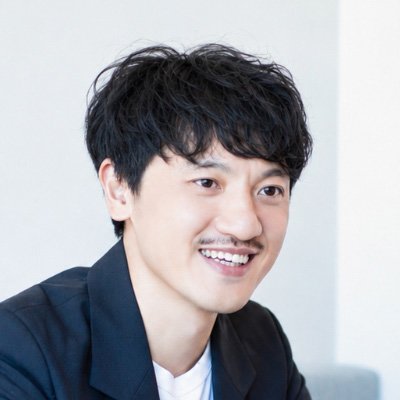
Neil Lin (Neil)
Product Management Department Vice President, LINE Taiwan Oversees management, localization, and UX improvements for the LINE platform at LINE Taiwan. He has spearheaded the role of LINE as a disaster prevention portal, including public-private collaboration with NCDR (National Science and Technology Center for Disaster Reduction) and the introduction of "Safety Check."
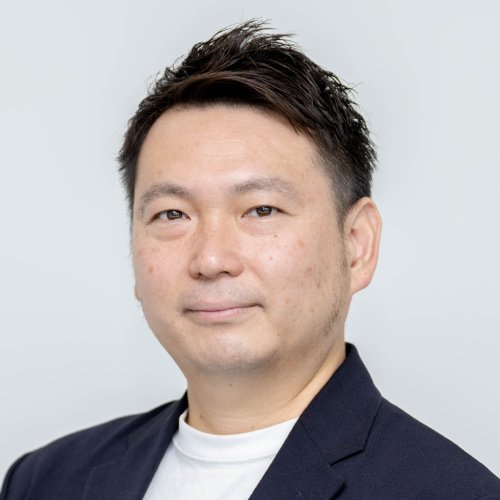
Sho Hashiguchi (Sho)
CSR Unit, Sustainability CBU, Governance Domain, LY Corporation Promotes the digital transformation of disaster preparedness and administration services, and LINE-based consultation services at LY Corporation in collaboration with government agencies and local municipalities. He has engaged in on-site support in disaster-affected areas, including areas affected by the Noto Peninsula Earthquake, as well as assisting local governments in utilizing LINE Official Accounts for disaster preparedness.
Moderator
Takeshi Yasuda (Takeshi)
CSR Unit, Sustainability CBU, Governance Domain, LY Corporation Utilizing his experience in responding to the Great East Japan Earthquake, he manages social contribution initiatives in the sustainability promotion division at LY Corporation, focusing on disaster preparedness, mitigation, and emergency response.
Theme 1: Origins & Motivations -- " Connecting with the People Who Matter, Right Away " : Before Taking on Disaster Preparedness Roles
Thank you all for gathering today. First of all, I would like to express my deepest sympathies to everyone affected by the earthquake that occurred in Kumamoto Prefecture on July 28 last month. As our thoughts remain with all those working tirelessly on recovery and relief efforts, I hope today ' s discussion will help strengthen our preparedness for future disasters.
Ahead of Disaster Prevention Day on September 1, we have invited CSR representatives from Japan, Taiwan, and Thailand for this panel discussion to share their initiatives and thoughts. Drawing on their experiences in each region, we will hear from each of them about the role LINE has played during disasters and the possibilities it holds for the future.
―― Q1. Have you ever had an experience where LINE helped you stay connected during a disaster?
Aey: Yes, I have. In fact, that experience was one of the key inspirations that made me believe technology can enormously ease people's anxiety during a crisis.
In late March 2025, Thailand experienced a major earthquake, one of the most severe events Bangkok residents have ever faced, especially in the downtown area with its many high-rise buildings.
That day, my parents, both 78 years old and retired, had gone out for a meal and a walk at CentralWorld (a major shopping mall in the heart of Bangkok) as usual. After the earthquake, I tried calling them immediately, but couldn't get through at all, because most communication networks were down for several hours. That period was agonizing. I didn't know where they were or whether they were safe, and there was no way to confirm their status. The anxiety and uncertainty were hard to put into words.
Eventually, a family friend happened to run into my parents and sent me a photo showing that they were safe. I felt an enormous sense of relief.
That experience made me realize that in a disaster, what people need most isn't just the ability to communicate, but the reassurance that "the people we love are safe." If technology can help us know someone's status, share location, or quickly send a safety confirmation to family and loved ones, it can dramatically ease people's worry and distress. That is why I believe so strongly in the LIFELINE project *1 and in LINE's role as communication infrastructure that keeps people connected during the moments that matter most.
*1: A disaster preparedness project promoted by LINE Thailand in partnership with more than 15 government agencies and private organizations.
Neil: On the morning of June 25 this year, heavy rainfall completely flooded the roads in the Neihu District where LINE Taiwan's headquarters is located. At that time, my biggest worry was that my family, colleagues, and friends -- unaware of the situation on the ground -- might go outside.
I immediately opened LINE to let my family know I was safe, and at the same time shared my colleagues' current locations and traffic conditions in our internal company group, urging everyone to refrain from non-essential travel. Because it is a tool we are accustomed to using every day, everyone was able to respond intuitively even in a sudden emergency, and critical information spread quickly.
In addition, this case emphasized the need for a 'Safety Check' feature in Taiwan. Simply tapping a status allowed users to report their safety to those around them and view everyone's status at a glance, enabling us to prioritize reaching out to those who hadn't replied yet. During a disaster, I felt that "staying connected" itself serves as immense support.
Sho: My parents, my wife's parents, and our relatives live in Kyushu, a region that frequently suffers damage from typhoons and heavy rain. In particular, when an earthquake measuring a maximum of 7 on Japan's seismic intensity scale struck Kumamoto late last month (July 28), I immediately contacted my family and relatives via LINE.
LINE's strength lies in the fact that once a message shows "Read," you can infer the other person is safe; if it isn't read, you can quickly move on to the next course of action, such as making a phone call. After the earthquake, while waiting for the "Read" mark, I called repeatedly and contacted other relatives to verify the situation.
During a disaster, the time spent not knowing the status of family members living far away is a huge burden. LINE reassured me that we can start safety confirmations quickly and without hesitation.
―― Q2. What led you to take on a role in CSR and disaster preparedness? Was there a personal experience that inspired you?
Aey: Actually, I didn't start out in CSR. I started in marketing and brand communications. My job was to build people's love for and trust in the LINE brand, not just as an app they use every day, but as a brand that has meaning in their lives.
What changed my perspective was that every time a disaster struck, we'd see people naturally turn to LINE, not because of any campaign or messaging, but because they needed to reach family, ask for help, and follow the most important information in their lives.
That was when I realized that a brand's value sometimes isn't built by what we say, but by what people rely on us for on their hardest days. This became the starting point for the LIFELINE concept, and it's why I've pushed for brand-building and social value creation to move forward together. I believe a brand that stands by people in a crisis is a brand that earns genuine trust.
Neil: My personal origin story goes back to the major earthquake (M6.7) in Hualien and Taitung in March 2022. Amid the violent shaking, I saw people around me all open LINE at once -- some asking if family members were safe, some confirming the whereabouts of close friends, and others sharing traffic and damage updates in group chats.
At that moment, I realized that during a disaster, people do not turn to new tools; they fall back on the communication channels they are accustomed to using in daily life. From there, I began thinking: besides sending individual messages or making phone calls, is there a way to help loved ones verify each other's safety faster and more easily? This also marked the very first time LINE activated its Safety Check feature in Taiwan.
In September of the same year, when another strong earthquake struck the Hualien-Taitung region, LINE activated "Safety Check" in Taiwan once again. By simply tapping a status, users could report their safety or check the status of others, resulting in approximately 15 million users viewing the status of family and friends. It was the moment I realized that even a seemingly simple feature can support urgent, real-world needs during an emergency. Our mission is not just to deliver features, but to remain a "digital lifeline" that continues to operate during the most vulnerable moments.
Sho: I originally had an interest in the communication domain connecting local governments and residents. In Japan, LINE is used in various everyday situations, such as receiving announcements from government agencies and handling administrative procedures. Today, LINE has been adopted by over 1,500 *2 of Japan's 1,788 municipalities, serving as a life platform connecting local governments and residents.
That role is tested most during disasters. While residents seek evacuation information and support, local governments are required to issue accurate information quickly. Feeling great purpose in having the familiar LINE app serve as that bridge was the deciding factor for me to get involved in disaster preparedness.
Personally, rather than a single specific event, my motivation comes from the cumulative experience of checking on my family in Kyushu every time a disaster strikes. I work in this field with the desire to utilize LINE not only for safety confirmations among family members, but also as a bridge connecting people to necessary government support.
*2: As of January 2026. The total number of municipalities includes all prefectures, cities, wards, towns, and villages (including special wards).
―― Q3. Could you share a specific moment when you truly felt LINE acted as a "life platform" in your country?
Aey: There have been several such moments, but the clearest one for me was during the flooding that hit many areas of Thailand. We saw people using LINE and OpenChat to report water levels, share passable routes, post shelter information, and relay real-time updates from government agencies.
What struck me was that Thai people already had a culture of communicating through LINE groups, whether for family, community, village, or condominium. When disaster struck, these groups instantly became mutual-aid networks. For me, that was the moment I saw that LINE isn't just a communication platform, it's infrastructure that lets communities look after one another when it matters most.
Neil: I was strongly impressed by what happened in September 2025, when a natural dam at Matai'an Creek in Guangfu Township, Hualien County burst and overflowed, causing severe flooding. Many volunteers (locally dubbed "Shovel Supermen") rushed to the disaster area with shovels, boots, and tools, but scattered information became a major challenge -- questions like "Where are manpower and supplies lacking?", "Which homes still need mud cleared?", and "Where should transportation, meals, tools, utilities, and heavy machinery be sent?"
What helped save the scene were the chatrooms of LINE OPENCHAT formed by volunteers. If a message posted "Short on hands in remote areas," replies like "I can provide transport" came immediately, sequentially matching food, heavy machinery, and medical aid. People who had never met connected through a single message, expanding the circle of support.
User status on screen is not mere system data; it is "proof that anxiety is being relieved." Delivering connection without disruption when it is needed most -- that is the most real and true form of a "Life Platform."
Sho: During the Noto Peninsula Earthquake in January 2024, in addition to broadcasting water supply and support updates via the municipal government's LINE Official Account, Ishikawa Prefecture's LINE Official Account allowed people living outside evacuation centers to register their location and contact details. This was directly utilized for receiving assistance and applying for disaster recovery procedures.
A "life platform" during a disaster means not only electricity, water, and telecom, but also connecting to necessary information and support. While LINE is an extension of daily life, in emergencies it serves as a life platform connecting people to people, people to communities, and people to governments. At the same time, I feel the heavy responsibility of keeping connections intact and delivering accurate, trustworthy information during crises.
Theme 2: Disasters × LINE Across Each Country and Region -- The "Frontlines of Disasters" Connected by LINE
Our next theme is "country-specific strengths and approaches." Let's learn from each other regarding how LINE, an integral part of everyday life, is utilized during disasters in each country and region, including partnerships with governments and differences in disaster preparedness cultures.
Q4.When a disaster strikes, how do users in your country or region use LINE?
Aey: The nature of disasters in Thailand differs from many other countries, since most are floods that develop gradually, rather than sudden events like earthquakes. So people use LINE to exchange ongoing situational updates, such as reporting water levels, sharing on-the-ground photos, indicating safe routes, warning neighbors through community LINE groups, and forwarding announcements from government agencies. LINE therefore does more than enable communication between individuals, it becomes a space that helps critical information spread quickly to people through the community's own networks.
Neil: In Taiwan, LINE is used for three main purposes: "obtaining real-time and reliable information," "checking the safety of family, friends, and colleagues," and "mutual aid through LINE groups and OpenChat."
For obtaining real-time and reliable information, people receive warning alerts for earthquakes, typhoons, torrential rain, and landslides via NCDR's LINE Official Account, where users can easily subscribe to the information they need to receive relevant push notifications, or get real-time updates on warning alerts, power outages, and school/work closures through the news service "LINE TODAY."
For checking the safety of family, friends, and colleagues, people confirm each other's safety via 1-on-1 messages, group chats, and Safety Check, exchanging details on local traffic, power outages, closures, and damage. Because LINE is integrated into daily life, users do not hesitate even in emergencies. For gathering civilian strength via LINE groups and OpenChat, [あ河2] when manpower, supplies, transport, or specialized support are needed in disaster zones, even strangers quickly divide roles like "Shovel Supermen" to coordinate supplies and volunteer assistance.
Sho: In Japan, LINE is used in three main scenarios: "safety confirmation," "obtaining necessary information," and "connecting to support." In safety confirmation, sharing short messages like "I am safe" or "I am at the shelter" allows users to share their situation with family, friends, and colleagues. Even when an immediate reply isn't possible, the "Read" feature lets people infer that the other person is safe. Sharing information within a group rather than contacting individuals one by one also carries great significance during disasters.
In obtaining necessary information, users can receive changing updates -- such as shelter locations, traffic conditions, water supply points, supply distribution, administrative procedures, and support systems -- from the LINE Official Accounts of municipal governments using the familiar LINE app. In recent years, initiatives allowing residents to report the status of evacuation sites and damage to local governments have also been advancing.
In connecting to support, during the Noto Peninsula Earthquake, Ishikawa Prefecture urged disaster victims living outside evacuation centers to register their contact details and other information on LINE. This enabled the prefecture to understand individual situations and deliver necessary support information and procedure guidance. Additionally, Kobe City in Hyogo Prefecture assists residents in taking safe evacuation behavior by using AI to aggregate photos of damage and location data posted by residents on LINE, creating a mechanism where people can check surrounding conditions and shelter information.
Because LINE is already an integral part of everyday life for users in Japan, it naturally serves as a gateway to disaster preparedness and information gathering during emergencies as well.
Q5. What has LINE made possible through collaboration with governments or local authorities?
Aey: One key collaboration has been working with the Department of Disaster Prevention and Mitigation (DDPM) to develop the LINE Alert *3 and Safety Check services. What made this collaboration possible is that LINE has over 56 million accounts in Thailand and is already a platform people use every day. When a disaster occurs, government information can reach the public quickly through a channel they're already familiar with. At the same time, working with the government taught us that in an emergency, speed alone isn't enough. Every piece of information must be accurate, credible, and verifiable, because accurate information helps people make safe decisions.
*3: A disaster alert service utilizing official LINE account, developed by LINE Thailand in partnership with the Thai government, to broadcast real-time emergency information on earthquakes, floods, PM2.5, etc.
Neil: By leveraging LINE's overwhelming penetration rate in Taiwan, we built a "trustworthy and familiar disaster prevention portal" together with the government.
A prime example is the collaboration between LINE Taiwan and NCDR. The "NCDR LINE Official Account," launched in 2018, consolidated disaster information from various agencies. Without downloading extra apps, users receive emergency alerts for earthquakes and typhoons, as well as weather, traffic, and daily life information tailored to their residential areas. As of June 2026, the account has nearly 2 million friends, offering a total of 47 types of alerts and observation services.
The true value of this initiative lies in delivering information tailored to each individual's location and living context through a trustworthy, everyday disaster prevention portal.
Sho: Ishikawa Prefecture identified the status of dispersed evacuees during the Noto Peninsula Earthquake and used LINE as a support counter for disaster certificate procedures. Kobe City in Hyogo Prefecture operates a "Disaster Bulletin Board" where citizens post damage photos to share information. Fukuoka City in Fukuoka Prefecture and Naha City in Okinawa Prefecture conducted an online evacuation training that only takes about 3 minutes to complete, achieving both ease of participation and greater awareness of disaster preparedness.
Because over 1,500 municipalities nationwide have adopted LINE, we can realize disaster preparedness that seamlessly connects resident reports to concrete actions and support, rather than ending at one-way information broadcasting.
Q6. What was the biggest challenge or difficulty you faced when developing disaster response features or services?
Aey: The biggest challenge is striking a balance between "speed" and "accuracy." In a disaster, people want information immediately, but at the same time, if that information is inaccurate, it can cause confusion or affect critical decisions. Another issue is coordination among the public sector, the private sector, and the product development team, each of which has different roles and processes. Building collaboration so that all parties can respond quickly requires trust and advance preparation.
Neil: As a life platform supporting over 22 million users in Taiwan, maintaining system "stability" so services never stop during an emergency is an absolute prerequisite.
The moment a disaster like an earthquake occurs, message volume on LINE spikes explosively. We have introduced mechanisms to smoothly distribute traffic congestion and automatically scale server capacity as needed, enforcing traffic control to prioritize light, critical data like "text messages" and "Safety Check" over heavy images and videos.
In particular, the "Safety Check" feature was designed from the development stage anticipating network congestion. Because its data payload is stripped down to the extreme, users can smoothly send the crucial update "I'm safe" even when cell towers are under heavy load. Furthermore, by distributing system and data management nodes across multiple regions for redundancy, we ensure high reliability so that a partial failure won't stop services nationwide.
Additionally, in Taiwan, we account for extreme situations such as geopolitical risks and complete telecommunication cutoffs. To ensure minimum safety status can be sent to family and friends even under extremely unstable connections, we continuously enhance infrastructure and features from a Business Continuity Planning (BCP) perspective.
Sho: Disasters and crises always happen suddenly, and the needs of disaster areas and local governments change minute by minute. Therefore, our biggest challenge is gathering feedback on the ground, making "agile" adjustments (testing quickly), and continuously updating services according to changing situations.
We felt that speed acutely during the Noto Peninsula Earthquake. At the time, conditions changed so rapidly that "a decision made in the morning was overturned by the afternoon." Even in partnerships with local governments that usually prioritize "safety, certainty, and planning," emergencies demanded close communication with the field to quickly catch "what people are genuinely struggling with right now" and reflect it flexibly in operations.
Q7. What efforts are you making to raise users' disaster awareness during normal times?
Aey: We believe disaster response shouldn't begin on the day a disaster strikes, it should start while everything is still normal. With this in mind, LINE Thailand launched the "LIFELINE: Ready Before the Crisis" project, a collaboration among more than 15 public- and private-sector organizations to build a culture of disaster preparedness among Thai people. Our goal isn't just to provide information, but to help people recognize that disasters can happen close to home, understand how to prepare in advance, and try out the relevant tools before they ever need to use them for real. Ultimately, what we want to build isn't just a new feature, but the confidence that whether it's an ordinary day or the hardest day, LINE will always be a platform people can trust and count on to stand by them.
Neil: We share disaster prevention information through press releases, blogs, social media, and collaborations with external NPO partners and government agencies. However, due to urgent digital governance issues like anti-fraud measures that take priority, our disaster prevention efforts are still developing. As public disaster awareness rises in Taiwan, learning about LY Corporation's highly systematic communication strategy through this panel discussion has served as a great starting point for us.
Sho: Even if people understand the importance of disaster preparedness, preparations tend to be postponed during normal times. Therefore, we design ways for users to experience disaster preparedness quickly, enjoyably, and clearly within the LINE app and smartphones they use every day.
For example, the " Surprise Evacuation Drill " conducted on LINE by our group company, LY Communications, in partnership with local governments, brought disaster training into daily life and reduced the burden of gathering at set times. In Japan, alongside LINE, we also offer interactive content on Yahoo! JAPAN, such as " Yahoo! JAPAN Disaster Preparedness Test " and " Smartphone Evacuation Simulation ," allowing users to learn through gamification.
Rather than provoking anxiety, our goal is to turn concrete evacuation actions and preparations into habits through repeated daily exposure. Additionally, we conduct company-wide initiatives around key dates, such as Disaster Prevention Day on September 1 and the anniversary of the Great East Japan Earthquake on March 11.
Interview date: August 6, 2026 Written by: LY Corporation Story Editorial Team *The affiliations and titles in the article are as of the time of the interview.
About The LY Corporation Story
Making daily life more convenient and exciting for everyone. As our corporate blog, The LY Corporation Story will share the inside story behind the challenges that we take on to create WOW as well as the thoughts and feelings behind them.