LINE Encryption Report(2025)
Purpose of this Report
The purpose of this report is to describe the type, scope, and deployment status of the encryption mechanisms integrated into each of LINE's main features.
Encryption in LINE
LINE employs various encryption technologies to protect user information. In addition to transport layer encryption, which is used to protect traffic between LINE clients and servers, we also apply Letter Sealing encryption to supported message types, call types, and media types. Letter Sealing is the name of the end-to-end encryption (E2EE) protocol developed by LINE, based on standard cryptographic algorithms. It is designed with the philosophy of maximizing user privacy by ensuring that message content cannot be viewed by anyone other than the intended parties under any circumstances. For details about the encryption protocols and algorithms used in LINE, please refer to our Encryption Whitepaper.
Major updates
In June 2025, LINE released the LY Premium Backup feature, that enables SGX-based E2EE backup of Letter Sealing keys and chat messages.
Encryption Deployment Status
(1) LINE Messaging
■ Letter sealing (End-to-end encryption)
Text, location, media file, calls in 1-to-1 chat room using LINE's messaging feature are end-to-end encrypted with Letter Sealing if one of the following conditions is met.
- Both users have Letter Sealing enabled in 1-to-1 chats
- All users have Letter Sealing enabled in group chats (groups with up to 50 members)
If you want to see if the chat room is protected by Letter Sealing, you can check the room menu. Please refer to the guide here. Messages other than text and location messages, such as image, video, file, and audio messages in lower versions that does not support Media E2EE, are encrypted only using transport layer encryption – either by LEGY*1 encryption or TLS.
- *1 LEGY stands for LINE Event-delivery GatewaY, and it's a custom-built API gateway server. LEGY uses standard cryptography algorithms for key exchange and encryption.
■ Transport layer encryption
The former default encryption was LEGY encryption. But we are migrating to TLS, and TLS is the default encryption protocol. Currently TLS 1.2 and 1.3 are supported.
We use either DHE or ECDHE for the key exchange to make sure forward secrecy.
Due to certain technical and environmental constraints, transport layer encryption was not sufficiently deployed for certain media types. However, starting from September 2017, we have maintained a transport layer encryption rate very close to 100%.
- Due to performance issues related to encryption, transport encryption deployment on certain platforms was delayed.
- In some countries, HTTPS could not be used on mobile networks for a certain period of time. Currently, transport encryption is deployed irrespective of network connectivity type.
- In July 2017, in order to resolve an issue with deploying transport encryption for audio files, transport encryption was scaled down for about two months. In September 2017, transport encryption scope was restored.
The following table summarizes the encryption (Letter Sealing, LEGY Encryption, TLS) deployment status for each message and media type.
| Message/media type | 2015 | 2016 | 2017/9 | 2018/4 | 2019/10 | 2020/9 | 2021/9 | 2022/8 | 2024/12 | 2025/12 |
|---|---|---|---|---|---|---|---|---|---|---|
| Text | ◯ | ◯ → ◎ | ◎ | ◎ | ◎ | ◎ | ◎ | ◎ | ◎ | ◎ |
| Location | ◯ | ◯ → ◎ | ◎ | ◎ | ◎ | ◎ | ◎ | ◎ | ◎ | ◎ |
| Stickers *2 | △ | △ | ◯ | ◯ | ◯ | ◯ | ◯ | ◯ | ◯ | ◯ |
| Image files *3 | △ | △ | ◯ | ◯ | ◯ | ◯ | ◯ | ◯ | ◎※5 | ◎※5 |
| Voice messages *4 | x | x | ◯ | ◯ | ◯ | ◯ | ◯ | ◯ | ◎ | ◎ |
| Video files *4 | x | x | ◯ | ◯ | ◯ | ◯ | ◯ | ◯ | ◎※5 | ◎※5 |
| Other files *3 | △ | △ | ◯ | ◯ | ◯ | ◯ | ◯ | ◯ | ◎ | ◎ |
| Message reaction | n/a | n/a | n/a | n/a | n/a | n/a | ◯ | ◯ | ◯ | ◯ |
Legend: ◎ Letter Sealing (end-to-end encryption) / ◯ Transport-level encryption / △ Partially protected / ☓ Not encrypted or not sufficiently encrypted
■Notes
◎ Letter Sealing is enabled by default in major LINE clients.
◯ Sufficiently secure transport encryption, as evaluated at release time, is employed by major LINE clients.
△ Partial data protection was applied. The security level of the employed encryption was considered adequate both at release time, and at the time of writing of this report.
☓ The referenced message type or functionality did not have sufficient protection, as evaluated at the time of writing of this report.
- *2△ During this period, HTTP was used to download sticker packages, but messages that include stickers were themselves encrypted.
- *3△ During this period, both HTTP and HTTPS were used. Depending on usage environment (OS, region, connection type, etc.) transport encryption may not have been applied.
- *4☓ During this period, transport encryption was employed only for uploads, when connected via WiFi.
- *5Image files and video files saved in the user album are outside the scope of Letter Sealing and only client-server encryption using TLS is applied.
For users running older versions of the LINE client, or using an older or unsupported OS version, the encryption methods described above may not be applicable, and an older encryption method or algorithm may be used instead. In such cases, LINE communication may not be sufficiently protected.
(2) LINE Free Calls (Audio and Video Calls)
LINE supports several types of free calls. Of those, 1-to-1 audio calls and 1-to-1 video calls are end-to-end encrypted using Letter Sealing as detailed in the table below. Group calls, group video calls, and Line meeting are only protected with transport-level encryption.
| Free call type | 2015 | 2016 | 2017/9 | 2018/4 | 2019/10 | 2020/9 | 2021/9 | 2022/8 | 2024/12 | 2025/12 |
|---|---|---|---|---|---|---|---|---|---|---|
| 1-to-1 audio calls | ◯ | ◯ → ◎ | ◎ | ◎ | ◎ | ◎ | ◎ | ◎ | ◎ | ◎ |
| 1-to-1 video calls | ◯ | ◯ → ◎ | ◎ | ◎ | ◎ | ◎ | ◎ | ◎ | ◎ | ◎ |
| Group audio calls | ◯ | ◯ | ◯ | ◯ | ◯ | ◯ | ◯ | ◯ | ◯ | ◯ |
| Group video calls | - | ◯ | ◯ | ◯ | ◯ | ◯ | ◯ | ◯ | ◯ | ◯ |
| LINE meeting | - | - | - | - | - | ◯ | ◯ | ◯ | ◯ | ◯ |
Legend: ◎ Letter Sealing (end-to-end encryption) / ◯ Transport-level encryption / - Not implemented
(3) Media End-to-end encryption
When LINE released the initial implementation of Letter Sealing in 2016, constraints such a device performance and incompatible media codec supports across platforms forced us to limit encryption to text content only. As those constraints have now subsided and with a renewed focus on user privacy, LINE decided to expand the scope of Letter Sealing and apply it to more content types. As part of this initiative, images, voice messages, videos, and file attachments send inside Letter Sealing enabled chat rooms are now also end-to-end encrypted. This feature rolled out first in Korea, Indonesia in Nov 2023 as part of a testing phase, and was then gradually rolled out to the remaining regions. The rollout to all regions was completed in Nov 2024 and the required LINE client minimum versions are detailed in the table below.
| Client type | Version |
|---|---|
| LINE for iOS/iPad OS | 13.15.0 |
| LINE for Android | 13.3.0 |
| LINE for Mac/Windows | 7.17.0 |
| LINE Chrome Extension/ChromeOS | 3.0.0 |
(4) Letter Sealing (end-to-end encryption) Deployment Status
Letter Sealing is LINE's end-to-end encryption protocol. Message types that support Letter Sealing are encrypted on the LINE client before being sent, and cannot be decrypted by LINE's servers. Letter Sealing was initially released as an optional feature in 2015/8 and was enabled by default in major clients in 2016. Currently most message types are encrypted with Letter Sealing but there are some exceptions.
■ Letter Sealing Protection Scope
- Text messages (in 1-to-1 chats, and in group chats with up to 50 members)
- Location messages (in 1-to-1 chats, and in group chats with up to 50 members)
- Media files (Image, Voice, Video, Other file) (in 1-to-1 chats, and in group chats with up to 50 members)
- Audio calls (1-to-1 calls)
- Video calls (1-to-1 calls)
■Letter Sealing Exception
In the following cases, a part of user communication can be sent to LINE servers
- Website preview (aka Pagepoker): To generate the website preview in the chat room, URLs are sent to the Pagepoker server and processed solely for the purpose of preview generation. If the thumbnails were generated only by the sender, it could be manipulated or forged, increasing the risk of phishing attacks. If both the sender and recipient generated the preview locally, the recipient’s IP address could be disclosed to the previewed website. To mitigate these risks and protect user privacy and safety, LINE generates all thumbnails on the server side. Users can opt-out of this feature in the settings (Settings → Chats → URL previews).
- Spam report: When a user wants to report a spam issue, the suspicious part of the chat message will be sent to the server for investigation. The message is sent to the server only if the reporter consents.
- Announced messages: You can "announce" things like messages you've sent and received, polls you created, and events so they permanently appear at the top of a chat. To make them available to newly joined members, they are sent to the server.
- Sticker keyword: For LINE to be able to recommend a suitable sticker for the chat context. LINE Privacy teams have designed an hybrid approach, where recommendation models are used locally on the device to list appropriate stickers, and Differential Privacy and Federated Learning techniques are applied when sending user's model differences to the server in order to update the models. This approach does not send plaintext keywords to the server. More information can be found in our Differential Privacy in LINE Federated Learning whitepaper.
When a bot account that provides features such as interpretation joins a chat room, messages in that chat room from the time it joins onward are no longer protected by Letter Sealing encryption. Also, the messages will not be end-to-end encrypted when you use the cloud backup feature provided by a third party such as Apple and Google. In a such case the raw content will be stored on the cloud storage.
■ Deployment Status Summary by Features
| End-to-End Encryption | Transport layer encryption | |||
|---|---|---|---|---|
| Letter Sealing | Partial Letter Sealing | SGX-based E2EE | Messages | Features |
| Text and location messages 1-to-1 calls Google Next-gen assistant Image files Voice messages Video files Other files |
Custom Sticker Plus*6 | Backup PIN LY Premium Backup |
Stickers Custom Sticker (non-plus) Message reaction Announce messages Imagemap message Template message Flex message Story message Read receipts URLs (when Website preview is enabled) |
Open chat OA chat Group calls LINE meeting LINE social plugin LINE Safety Check Image/video files in the albums Note LINE AI LINE AI Talk Suggest |
*6 To generate a sticker with a custom wording of a user's choice, the user's client needs to talk to the rendering server. The text communication between the client and the rendering server is protected by E2EE. But the result image will be protected by transport layer encryption only.
■ Requirements for using Letter Sealing
Letter Sealing is enabled by default in all regions and cannot be manually turned it off since 2021.
■Letter Sealing Versions
Letter Sealing v2
The original version of LINE messaging end-to-encryption protocol, released in 2015, is referred to as Letter Sealing v1. While v1 provides end-to-end encryption for both 1-to-1 and group chats, several protocol-level attacks that could potentially lead to message forgery and user impersonation were reported via our Bug Bounty Program by Takanori Isobe (University of Hyogo, Japan) and Kazuhiko Minematsu (NEC Corporation, Japan). We verified that the attacks are not practically feasible due to additional server-side checks and restrictions implemented in LINE's messaging servers. In order to improve the security of our users and avoid potential future attacks against Letter Sealing, we developed Letter Sealing v2 in collaboration with the researchers. Details about Letter Sealing v2 can be found in our Encryption Whitepaper.
Letter Sealing v2 was deployed in October 2019 to all major LINE clients. The table below shows the minimum version of each LINE client required to support Letter Sealing v2.
| Client type | Version |
|---|---|
| LINE for iOS/iPad OS | 8.15.0 |
| LINE for Android | 8.17.0 |
| LINE for Mac/Windows | 5.12.0 |
| LINE Chrome Extension/ChromeOS | 2.2.0 |
■ E2EE v2 usage status
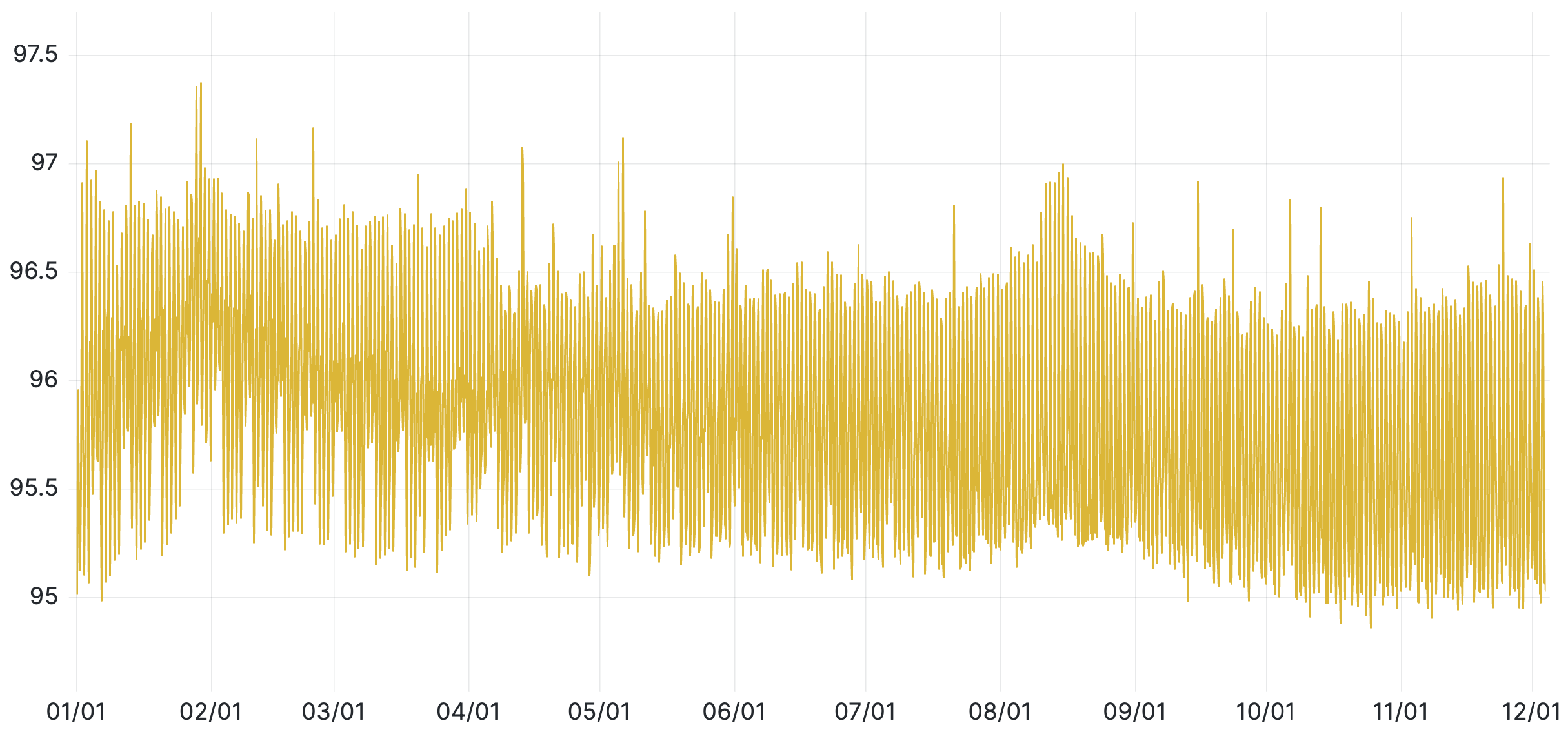
Figure 1: E2EE v2 ratio in the total E2EE traffic (2025)
E2EE v2 has been deployed since 2019. The graph above shows the ratio of E2EE v2 in the total E2EE traffic. For the previous data, please refer to the previous Encryption Report.
■E2EE key migration
When you change your phone, you need to transfer the E2EE key in order to decrypt the previous messages.
In case you still have your old phone, you can transfer the E2EE key. For the details, please refer to the official guide.
For the safety, we provide an end-to-end encryption for the E2EE key. Each device generates an ephemeral ECDH key pair. And the old device's public key is sent via the QR code as an Out-Of-Band cryptographic data. Then the E2EE key is encrypted by AES256-GCM using the derived key.
■ E2EE key backup
It is possible to do E2EE key backup to keep it safe. Then you can access the encrypted messages, even if you lost the phone. Backup PIN encrypts the E2EE keys using "client-side encryption"; the E2EE key is encrypted by the key generated from a 6-digit PIN code. More over, the encrypted E2EE key is protected by our SGX server; the encrypted E2EE key is also end-to-end encrypted by our SGX server. Backup PIN only backups E2EE keys, but not chat messages. However, restoring E2EE keys allows the client to receive and decrypt again recent past messages. For the details enabling, please refer to the official guide.
LY Premium Backup is available only to LY Premium members. It uses a similar architecture to Backup PIN, but instead of using a PIN code, it uses the LINE login password as a secret. The encrypted keys are also end-to-end encrypted with our SGX server. LY Premium Backup also do a full E2EE backup of the chat room messages and stores it on LINE servers. For details enabling it, please refer to the official guide.
(5) Forward Secrecy Deployment Status
Forward secrecy is enabled in some LINE usage environments. Even if one of the parties' long-term private key is leaked or compromised, forward secrecy guarantees that messages encrypted before the time of compromise are still protected. Currently, only some of the LINE's communication channels support forward secrecy.
■ Forward Secrecy for LINE Client-Server Communication (forward-security in the case of LINE server key leak)
2021 Supporting cases reduced *7
2017/9 ○ Supported for major clients *8
2016 △ Partially supported *9
- *7TLS1.3 0-RTT(Zero Round Trip Time) has been enabled
- *8May not be supported depending on OS and LINE client version
- *9Supported for some regions and client versions
■Forward Secrecy in Letter Sealing (forward-security in the case of Letter Sealing private key leak)
Not supported
Last revised: February 2026