Group CEO Series: ZVC CEO In Joon Hwang on Global Strategy: Shaping the Future Through Asia-Initiated Investment



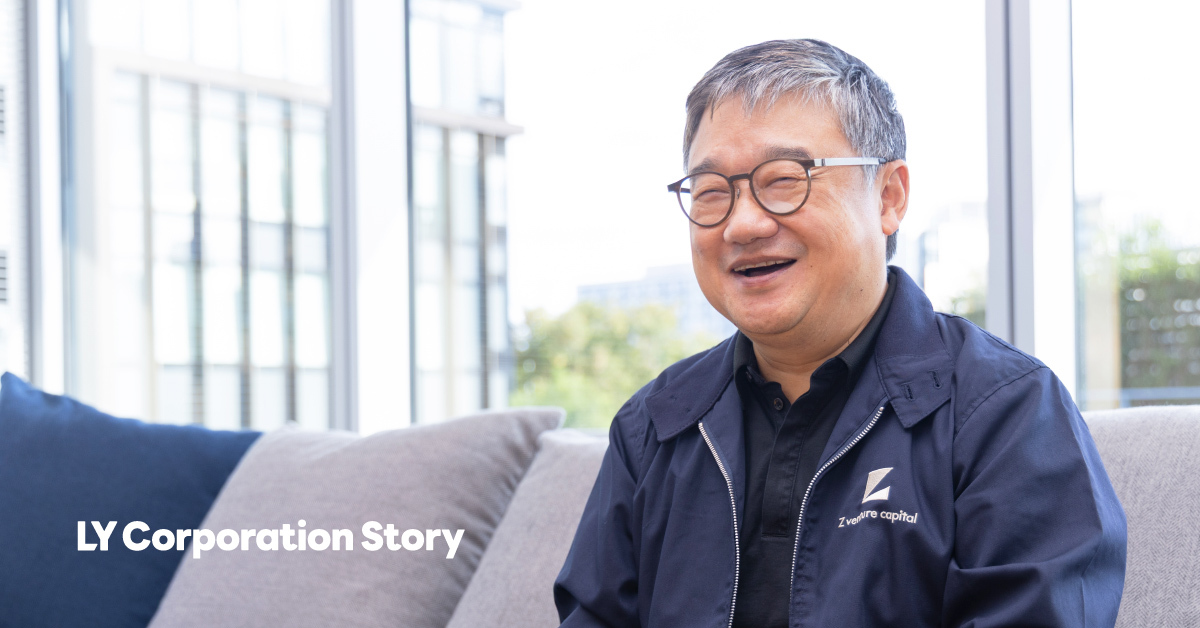
With a portfolio of over 100 companies spanning media, commerce, and finance both in Japan and abroad, the LY Corporation Group continues to generate synergy across a wide range of businesses. This series highlights the careers and visions of the CEOs leading these companies.
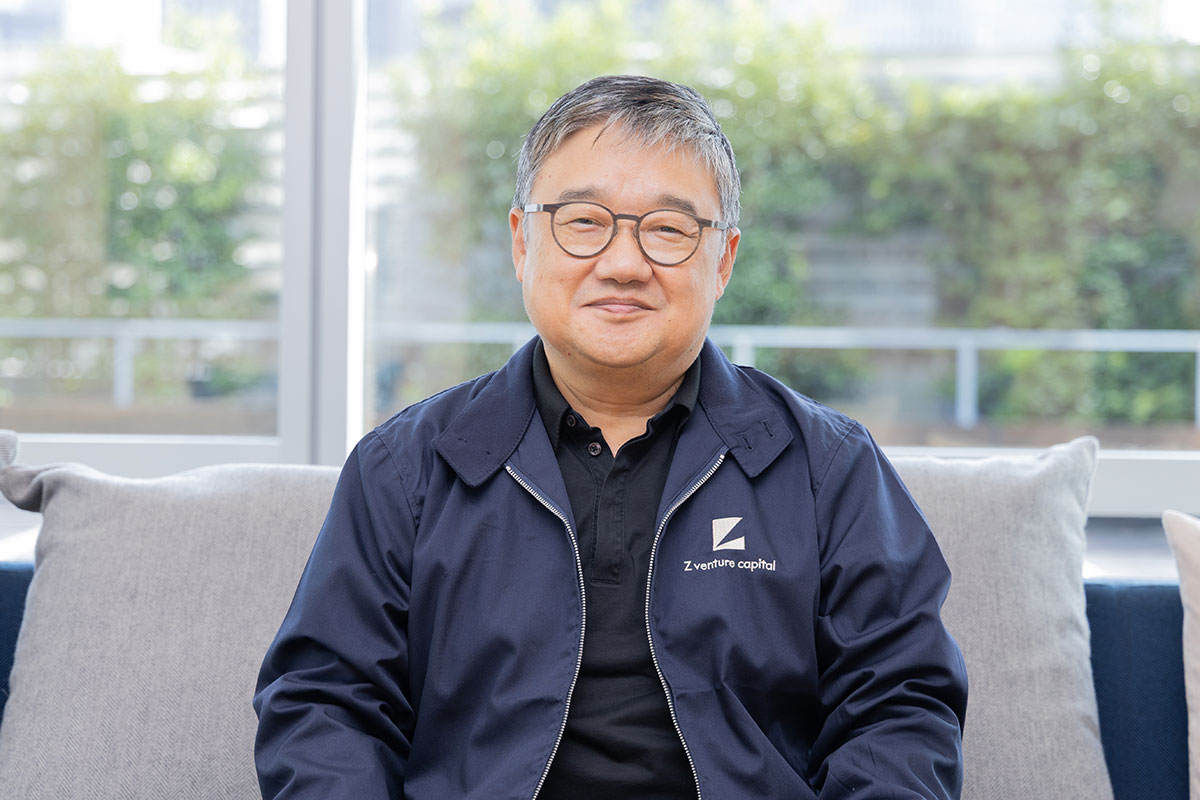
In the fourth installment of the series, we feature In Joon Hwang, CEO of Z Venture Capital (ZVC), the corporate venture capital arm of LY Corporation. Recently named to the Global Venturing Powerlist 2025, Hwang also serves as Chief Global Investment Officer (CGIO) at LY Corporation, making him a key figure in shaping the Group's global strategy.
What does "future-shaping investment" look like, from the perspective of someone who has spent his career at the forefront of Asia'sーand the world'sーinvestment landscape?
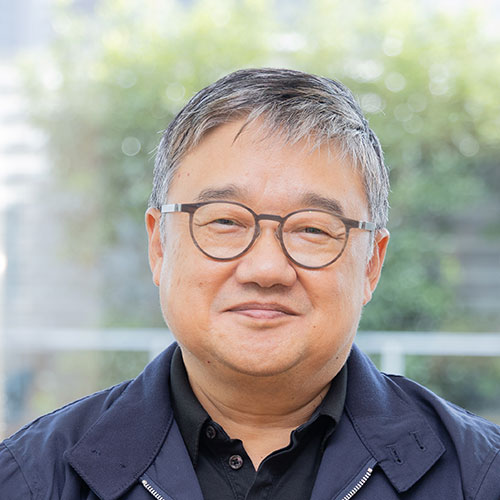
- In Joon Hwang
- Managing Partner and CEO, Z Venture Capital; Executive Corporate Officer and CGIO, LY Corporation
After holding positions at Samsung Electronics and Credit Suisse, Hwang joined NHN (currently NAVER) in 2008. He became a Director at A Holdings in 2021, and was appointed Representative Director and CEO of LINE Financial in 2023. He currently serves as Executive Corporate Officer and CGIO at LY Corporation. In 2024, he was named CEO of Z Venture Capital and has held the dual role of Managing Partner and CEO since 2025.
Embracing the unknown leads to the greatest growth
――You graduated from Seoul National University's Department of Economics and then went on to earn an MBA from New York University. That's quite an impressive academic pathーwhat were you like as a child?
I've loved history ever since I was a child. Although I had a strong desire to study it more deeply, I chose to major in economics when I entered university.
That said, my interest in history never faded. I enjoy traveling to historical sites and castles, and I often read books on the subject.
When it comes to Japanese history, I'm especially drawn to the period of dramatic change from the late Sengoku era to the Azuchi-Momoyama period.
――After working at major companies like Samsung Electronics and Credit Suisse, what led you to join NAVER, which was a startup at the time?
Back then, the internet was just starting to become a part of everyday life. While I was working at a securities company, I received an offer to become CFO from NAVER, a service I had been using as an ordinary user.
Since IT companies were not yet mainstream in business, people around me asked, "Are you really going to give up a stable position in finance?" But I felt excited by the idea of venturing into something unfamiliar and wanted to take on a new challenge in an unknown field.
I had already had the experience of changing jobs several times by then, and my decision-making criteria were always the same: "Is this a new challenge?" and "Will I be able to grow?"
――Since joining NAVER in the IT industry, you have stayed within the same corporate group. Was there a turning point in your career?
Yes, there was. As CFO at NAVER, I was involved in many startup investments, and that naturally led to me serving as CFO at LINE as well. My current roles at ZVC and LY Corporation are a continuation of that path, which included LINE's IPO and the business integration with Yahoo Japan.
Integrating companies with different scales and cultures was difficult and a major challenge, but I am proud that I was able to contribute by making use of my previous experience.
In fact, when I stepped down as CFO of NAVER and came to Japan to serve as CFO of its subsidiary LINE, I could barely speak Japanese. Even so, I raised my hand for the role, because I believed that diving into an unfamiliar environment and taking on challenges would offer the greatest opportunity for personal growth.
――As an investment professional, what do you find interesting or fulfilling about your work?
Both NAVER and Yahoo Japan started out as small ventures.
Even now, when you look at the US market, the IT mainstream is constantly shifting.
Anticipating those changes, identifying and investing in promising companies and entrepreneurs, and supporting their growth is a very rewarding job.
We support start-up entrepreneurs not only financially but also by leveraging the strengths of the LY Corporation Group. I believe that is our mission.
ZVC as a "gateway" connecting Asia and the United States
――Could you tell us how you became the CEO of ZVC?
ZVC was formed through the merger of LINE Ventures and YJ Capital. Initially, I operated in tandem with Mr. Hori (the former CEO), and as Chairperson, I was mainly responsible for global investments. Later, when Mr. Hori stepped down, the management team asked me to take over, and that's how I became CEO.
――You seem to be constantly flying around the world, holding key roles at several companies. What do you focus on when leading across regions?
Recently, ZVC opened a new office in San Francisco, and I attended the opening ceremony. Our goal for the office is to serve as a "gateway" connecting the startup ecosystems of the United States and Asia.
ZVC has bases in Japan (Tokyo), Korea (Seoul), and the United States (San Francisco), and while leveraging the strengths of each region, we work together as "One Team."
Our organization is small, which is why we value ownership among each team member. We make investment decisions by sharing our perspectives and holding active discussions.
Ultimately, I hold the final responsibility, but since we have highly motivated members, I try to respect their autonomy as much as possible and focus on serving in a supportive role.
――We often hear that the Japanese investment market is unique. How does the market trend here differ compared to other countries?
In Japan, there is a high number of Corporate Venture Capitals (CVCs) established by operating companies, and in many cases, venture capital firms are created in the form of subsidiaries. Overall, the market tends to be conservative in its risk-taking, with a stronger focus on investing in later stages such as Series Bーwhen the business model has been somewhat validated and the company is ready to scale.
In contrast, in countries like the US and Korea, there are more independent VCs that actively invest in early-stage startups.
At ZVC, although we are a CVC, around half of our investments go into the seed (initial fundraising stage) and Series A (business scaling stage). We believe that supporting entrepreneurs who take risks and take on challenges is precisely our reason for existence.
――Do you have any memorable investment cases?
There are quite a few, so it's hard to pick just one. But one example is Utaite, a unique Japanese company that pioneered 2.5D IP by incorporating both real-life artists (3D) and anime-style IP like VTubers (2D). To be honest, at first I couldn't keep up, but after being inspired by the passion of the representative and the team, I believed in their growth and have invested 4 times so far.
Another example is Wrtn Technologies, a generative AI startup from Korea that has also expanded into Japan. The moment I met the founder, I had a strong sense that he would get it done.
Especially when it comes to startups, I believe that ultimately, it is the quality of the management that drives the company's growth. Even with the same business model, there is a significant difference between companies that succeed and those that do not. That ability to get it doneーto take things one step further with precisionーis what creates a major difference.
Therefore, meeting and talking directly with the management is extremely important. Sometimes I leave it to my team, but I also make decisions myself by meeting directly. In those cases, more than the business model itself, I focus on discerning the leader's determination and execution capability.
Utaite (Japanese only)
The new model of global CVC as indicated by the Powerlist 2025
――You were selected for Powerlist 2025, which recognizes the 100 most influential professionals in the global corporate venture capital space. How do you view this recognition?
To be honest, I was surprised myself. However, I believe it was an acknowledgment of our active investment efforts across the IT and AI fields, as well as in areas like space and robotics, following the launch of the 30 billion yen-scale ZVC Fund II, and the cross-border collaboration we have advanced.
While we are a CVC, we place great importance on professionalism and speed comparable to independent VCs. We are actively investing in early-stage startups while constantly seeking collaboration with the LY Corporation Group. As a result, we are receiving significant attention from startups, and the number of offers is increasing.
――In addition to your active investment stance, where do you see the unique strengths and raison d'être of ZVC, being a CVC originating from Japan?
Startups in the US, once they achieve a certain level of success, often tell us, "If we go to Asia, we want to expand into Japan first." This sentiment is similar across Asia; successful startups in their home countries are keen to enter the Japanese market. That is precisely why I feel there is great significance in ZVC becoming a hub that connects Asia and the US, centered around Japan.
We possess unique strengths that are not found elsewhere, such as our global network and diverse business synergies, so I believe these factors largely contributed to our selection for the Powerlist 2025.
――How do you anticipate the fields ZVC is focusing onーsuch as AI, space, and roboticsーwill transform society in the future? Where do you see things in ten years?
I think our lives will change dramatically, not in ten years, but likely within the next five years. AI, cloud, SaaS, roboticsーall these technologies will evolve in coordination with each other.
The impact will be as significant as "before and after the internet."
We don't just invest in technology; we invest in the entrepreneurs who figure out how to implement that technology socially. We want to fully support their challenges.

The power of "Get it Done" drives the future
――What message would you like to convey to the next generation of entrepreneurs?
Looking at the Japanese investment market, I feel that there are many talented individuals, especially among the younger generation. At the same time, I've sometimes felt that there's a lack of boldness and that people tend to be a bit too cautious.
But that's starting to change in a positive way. The number of startups is increasing, and not only the younger generation but also the older generation is actively taking on challenges. The government is also supporting this.
Now, AI is rapidly evolving, leading to major changesーthe biggest since the birth of the internetーand creating new business opportunities.
I want to encourage entrepreneurs to take on new challenges without fearing failure.
――Besides the importance of "Get it Done," are there any other core beliefs or values that you hold dear?
It is to never compromise on the values I believe in. Whether in investment or management, I do not make decisions without conviction.
What I look for in an entrepreneur is "What do they truly want to achieve?" If their conviction is clear, they should be able to overcome any difficulty. The same applies to a company; the goal should not merely be to generate profit, but to better the lives of the users.
That aligns exactly with LY Corporation's missionー"Create an amazing life platform that brings WOW! to our users." It also aligns with our core value of "Users Rule."
――As an executive corporate officer at LY Corporation, please tell us about the global strategy of LY Corporation and its coordination with ZVC.
Currently, LY Corporation's global business is developed around the LINE service, and we are advancing localization tailored to the culture of each region. As a result, we are seeing an increasing number of region-specific success stories, such as the mobile payment service "LINE Pay Taiwan" and the food delivery service "LINE MAN" in Thailand.
Group synergy naturally emerges when our portfolio companies grow.
Our first priority is to invest in good companies and grow together with them. While we provide support, we also, conversely, receive new inspiration and sometimes find connections to new business models. I believe this kind of mutual collaboration expands the potential of the entire Group.
――Finally, is there anything you'd like to say to business professionals, including those within the Group, who are navigating this era of significant change?
This is something I consider when making investments, but in the coming era, neither individuals nor companies without global competitiveness will be able to survive. As we evolve from PCs to mobile, and now into the age of AI, global competition is accelerating more than ever before.
This is not a matter of language; we must constantly ask ourselves whether the quality of our work meets global standards.
In an era where even AI is becoming a competitor to humans, it's more important than ever for each of us to sharpen our strengths and keep challenging ourselves from a global perspective.
Above all, I want people to have the determination to "Get it Done." I believe that's the kind of mindset that can truly become a driving force for the future.
Interview date: October 28, 2025
*The affiliations and titles in the article are as of the time of the interview.
Related Links

- About The LY Corporation Story
- Making daily life more convenient and exciting for everyone.
As our corporate blog, The LY Corporation Story will share the inside story behind the challenges that we take on to create WOW! as well as the thoughts and feelings behind them.