One App, Many Places to Belong: How LINE OpenChat Is Growing in Thailand




LINE OpenChat (hereinafter referred to as "OpenChat") allows for casual conversations and information exchange among people with common attributes and interests such as age and hobbies. Participants can join anonymously and freely create or join rooms based on their interests.
In Thailand, OpenChat plays a prominent role in people's lives. It is used in a wide range of situations―from school-related discussions and fan activities to simply sharing everyday feelings. We spoke with Kia, who oversees the service locally, to learn more about the most popular rooms, strategies for managing the platform, and why the service resonates so strongly with users in Thailand.

- Nadhakriz Kanchanamantana(Kia)
- Kia joined LINE Thailand in 2019. He leads the growth of LINE OpenChat by overseeing the entire business from formulation to implementation of strategies. In addition to developing monetization models aligned with user needs and expanding the platform, he draws on over 30 years of experience in the entertainment, online gaming, and media industries to design the service and manage communities from a user-centric perspective.
One in Three in Thailand Use OpenChat―for Education, Fan Communities, and Emotional Support
――What are some of the unique characteristics of OpenChat in Thailand?
OpenChat has become deeply embedded in people's daily lives in Thailand, with approximately 20 million monthly active users―meaning that one in three Thais uses the service. The majority of users are under 35, and many are active in multiple communities, such as those related to school, fandoms, or hobbies.
Instead of turning to search engines or social media, some users say their first step when looking up their interests is to use OpenChat. It's common for individuals to be in three or more groups, making the platform a natural space for gathering real insights and interacting with others.
――Can you give us some examples of how OpenChat is used in real life?
One of the most common use cases is in education. OpenChat saw rapid adoption during the COVID-19 pandemic, when online classes became the norm. Previously, students used LINE group chats, but many were uncomfortable using their real names or personal accounts at school. This is because privacy is highly valued in Thailand, and people prefer to keep their personal and professional lives separate.
OpenChat solved that issue. Since users can create a separate profile with a different name and icon from their LINE account, the psychological barrier to participating is much lower. For teachers, it became an optimal tool for managing daily tasks―creating different groups for each class, receiving homework, or distributing class schedules. In elementary schools, parents and guardians also use OpenChat to coordinate pickup times, notify their child's health, or confirm school events. At the high school and university level, the platform is used to exchange entrance exam information and share study plans, serving as a collaborative space for learning with peers.
――How is OpenChat used outside of education?
One of the most distinctive aspects of OpenChat in Thailand is its strong connection to fandom culture. Whether it's K-pop or T-pop idols, actors, BL drama casts, or beauty influencers, fan activities are extremely popular across all genres. OpenChat has become an essential space for fans to show support and share updates.
For example, Butterbear, a bear mascot character, enjoys idol-like popularity in Thailand. The dedicated OpenChat room for Butterbear has over 30,000 members, who use it to share information on event appearances, discuss merchandise, and send supportive messages in real time.
――So OpenChat plays a central role in fan communities?
Exactly. Fans take the lead in organizing support ads, producing merchandise, and even launching charity campaigns, creating significant economic impact through fandom-driven initiatives. In the past year, a new trend has emerged: joining a fandom means joining its OpenChat group. In Thailand, it's now common practice to first enter an OpenChat room when you want to support your favorite idol or character.
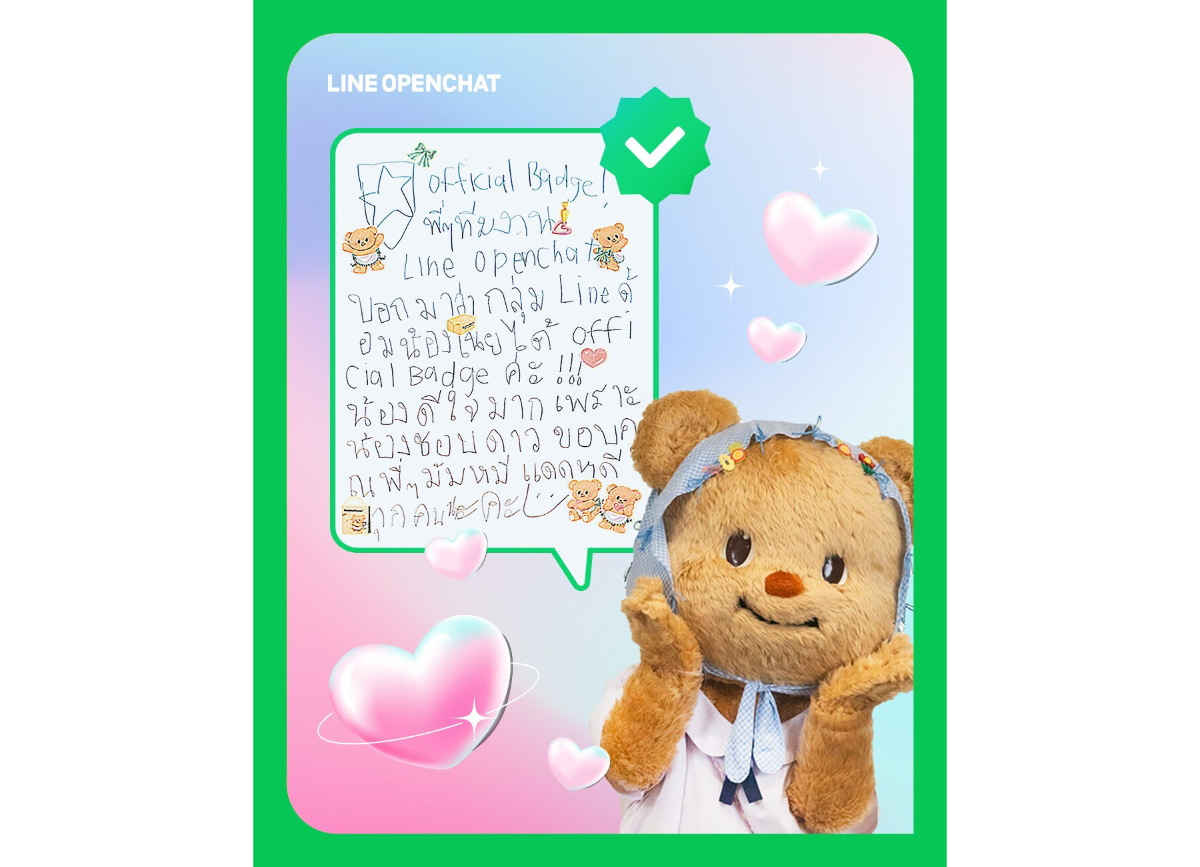
Message given to LINE Thailand when the official badge was granted to the Butterbear OpenChat group
Butterbear "The LINE OpenChat team just told us our group got an official badge! I love stars, so I'm truly happy! Thank you to Mommy bears, Daddy bears, and everyone who supported us!"
Moreover, during Miss Universe Thailand 2023 and 2024, OpenChat was made the official channel for contest updates in partnership with TPN Global, a leading Thai entertainment company. During the contest camp period, real-time updates such as behind-the-scenes content, news, and candidate activities were shared, making the platform a space for fans, participants, and judges to connect.
In this way, OpenChat offers more than just information―it provides an engaging fandom experience where users can enjoy supporting together.
――What are some other ways OpenChat is being used?
OpenChat is increasingly being used as a space for emotional connection and support. For example, in what are known as "loneliness-themed" rooms, users share feelings like "I'm feeling a bit down today," or "I want to talk to someone, but it's hard to open up to people I know." Simple conversations like "Have you eaten?" or "Are you feeling tired?" help ease the anxiety of being alone. OpenChat is becoming a kind of "third space," where people can connect at a comfortable distance―not as a romantic partner or close friend.
Unique "role-play"rooms have also gained popularity. In an OpenChat group, for example, participants take on the personas of BLACKPINK members―saying things like "I'm Rose!" or "I'm Jisoo!" If someone leaves, the group may post, "Now recruiting a new Lisa,"creating a small theater-like experience.
There are also rooms dedicated to each Hogwarts house from Harry Potter, or groups where people role-play characters from manga, anime, or dramas. These spaces let users step away from reality and play with what they love.
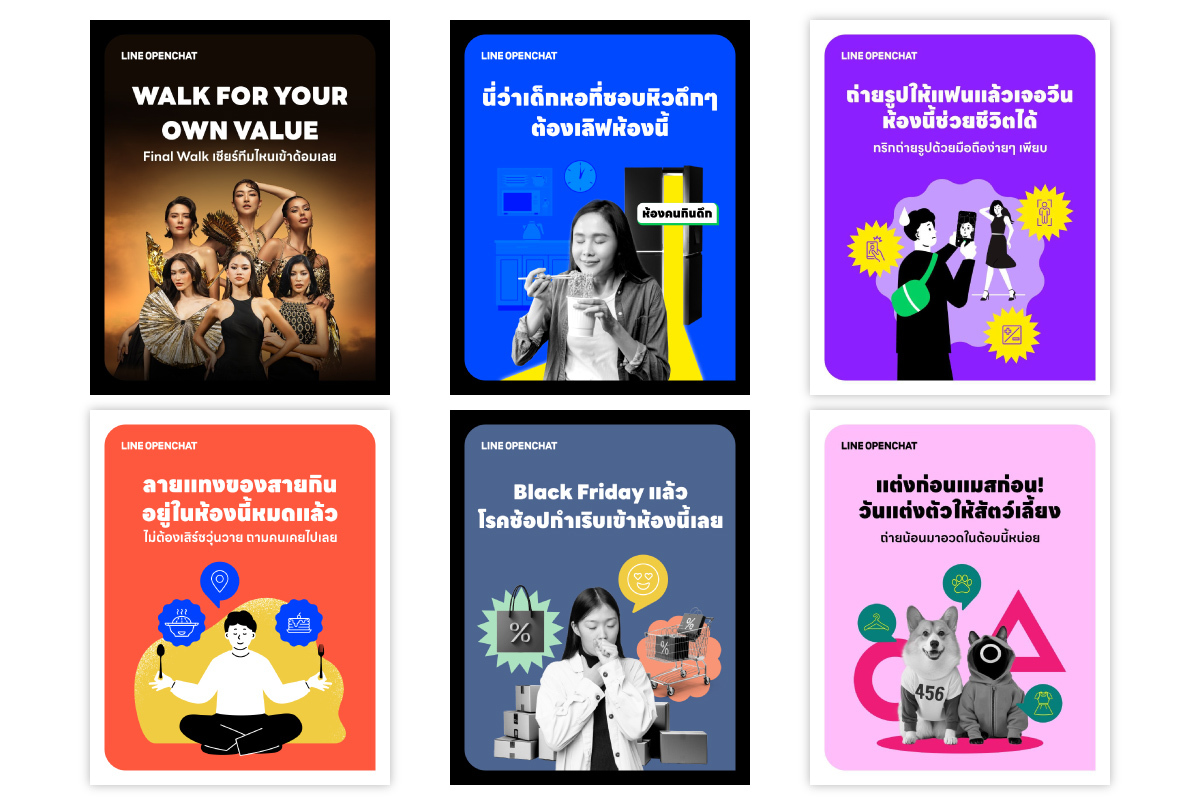
Thailand's OpenChat is home to a wide variety of vibrant communities, including those supporting reality show contestants, sharing late-night budget meals, exchanging photography tips, restaurant recommendations, Black Friday deals, or even pet fashion ideas.

Why OpenChat Has Gained Traction in Thailand
――It seems the platform is used in many different ways. What cultural or user needs do you think explain this widespread adoption?
I believe the main reason is that people with diverse interests were looking for a safe space to share what they love.
In Thailand, it's common for individuals to wear multiple "hats"―someone might be a K-pop fan, a student preparing for university exams, and a cooking enthusiast, all at once. OpenChat allows users to switch between these identities freely, which helped the service become a natural part of daily life.
Another cultural trait is that while Thai people have a strong desire for recognition, they also tend to be reserved when it comes to self-expression. OpenChat's anonymous nature makes it a safe and comfortable space for people to express themselves. The platform also offers a flexible range of features―like file and image sharing, notes, event tools, and polls―that work well for both learning and hobbies.
I think this combination of cultural fit and functional ease is what has helped OpenChat become so firmly established in Thailand.
――In response to these user behaviors, what mission or principles guide the operation of OpenChat?
Our mission is to create a space where everyone can feel they truly belong. No matter who you are or what you're interested in, we want to provide a place where you can connect with like-minded people and feel safe expressing your thoughts and feelings.
We believe it's important for users to feel heard and accepted as individuals―without being denied or dismissed. That sense of being recognized as a person is a core value we hold dear.

Maintaining a Safe and Trustworthy Environment
――Given OpenChat's strong presence in Thailand, having robust operations must be critical. What steps have you taken on that front?
Ensuring a safe and secure environment for users is one of our top operational priorities. As the number of users grows and fandom activities become more active, we've implemented systems that allow users to quickly identify trustworthy groups.
For example, we issue official badges to rooms operated by celebrities, key opinion leaders (KOLs), and companies to help prevent impersonation and fraud. In addition, we award a "Super OpenChat badge" to active rooms that meet certain criteria―such as volume of posts, number of members, and overall community health― making it easy to recognize vibrant and safe communities.
――What kind of support do you provide for group administrators?
We offer a variety of support initiatives for OpenChat room administrators. For instance, we provide knowledge articles and training programs that cover how to handle spam and inappropriate content. We also host regular meetups and award events to recognize outstanding administrators, creating opportunities for them to motivate and learn from each other and grow their communities.
These efforts help motivate administrators to maintain high-quality spaces. We also encourage users to report anything they consider suspicious, and we continue our efforts in information-sharing and awareness-building so that safety is upheld not only by the platform, but also by users themselves. We plan to further strengthen these support systems and awareness efforts to ensure OpenChat remains a safe, long-term space for everyone.

Five communities recognized at the OpenChat 5th anniversary admin awards
・Butterbear: The largest fandom on the platform, with over 38,000 members. A warm, welcoming space that feel "just like home"for fans.
・Moo Deng: A fast-growing community supporting Moo Deng, a popular pygmy hippo at Khao Kheow Open Zoo in Chonburi Province. Over 10,000 users joined within 10 minutes of launch.
・Cherosquare: A long-standing fandom supporting Cherprang, the first captain of BNK48. Known for its strong sense of unity and sustained activities.
・THAMMASAT SQUARE: The most popular open university community where students and graduates of Thammasat University, as well as people from other universities, can participate.
・Mali Club: The most active community for parents, supporting the "first 1,000 days" from early pregnancy to two years after birth.
――How do you identify user needs?
We have an in-house research team that regularly conducts user studies. These look into questions like: "What emotions and goals drive people to use OpenChat?", "How do behaviors differ by generation?", and "How effective was a given campaign?" We carefully examine these points.
The insights we gather are used not only to improve the service internally, but also in collaborative initiatives with companies and universities. For example, if we know that a certain tone resonates well with Gen Z, we can use that information to shape promotional strategies. Understanding where users are right now forms the foundation for building a service that people will continue to use for a long time.
Creating a "Place to Belong" for Every User
――Kia, what moments have you found most rewarding in your work so far?
Personally, I really enjoy creating content and designing campaigns. For example, when we develop a promotion that fits a specific community perfectly and see it actually resonate with users and generate excitement―that makes me genuinely happy.
Since OpenChat has such a wide range of user demographics and room types, I enjoy thinking about different approaches tailored to Gen Z students, working adults, or parents. Even outside of work, I join different groups as a hobby to see what topics are trending. Being able to directly sense the mindset and atmosphere of younger generations is one of the most interesting aspects of this job.
But above all, the most rewarding moments are when I realize that something I helped create has become a"place to belong" for someone. It's those moments that motivate me to keep building even better spaces for our users.

Kia:"I'm a big fan of sneakers, so I join groups about sneakers to stay up to date. I also follow groups about sports and current events that interest me."
――Finally, could you share your vision for the future?
Our top priority moving forward is strengthening our approach to younger generations. OpenChat is already widely used by high school and university students, but we want to evolve into a service they'll want to continue using into adulthood―a long-term companion throughout different stages of life.
To achieve this, we plan to further strengthen our partnerships with universities by running campaigns, marketing competitions, and supporting the launch of on-campus communities. We're also working with companies in the entertainment industry―such as music labels and modeling agencies―to develop new features and systems that make fandom experiences even more enjoyable.
Additionally, we want to expand collaborations with beloved Thai characters like Butterbear, so that OpenChat continues to be a place people naturally gravitate toward. Our goal is to build a platform where anyone―regardless of age or interest―can find a community that feels just right for them.

Other recommended articles
-
Leadres

How LINE Has Become Thailand's Everyday Life ― The Strategy and Future of LINE as Thailand's National Infrastructure
-
Leaders

There is a Bank Inside LINE? The Reason Why "LINE BK" is Rapidly Growing in Thailand
-
Leaders

LINE Thailand's New Strategy to Enrich Digital Life in Thailand: Report on LINE CONFERENCE THAILAND 2025
Interview date: August 27, 2025
Written by: LY Corporation Story Editorial Team
Photos by: Takuya Yamazaki
*The affiliations and titles in the article are as of the time of the interview.

- About The LY Corporation Story
- Making daily life more convenient and exciting for everyone.
As our corporate blog, The LY Corporation Story will share the inside story behind the challenges that we take on to create WOW! as well as the thoughts and feelings behind them.